
Advertisement
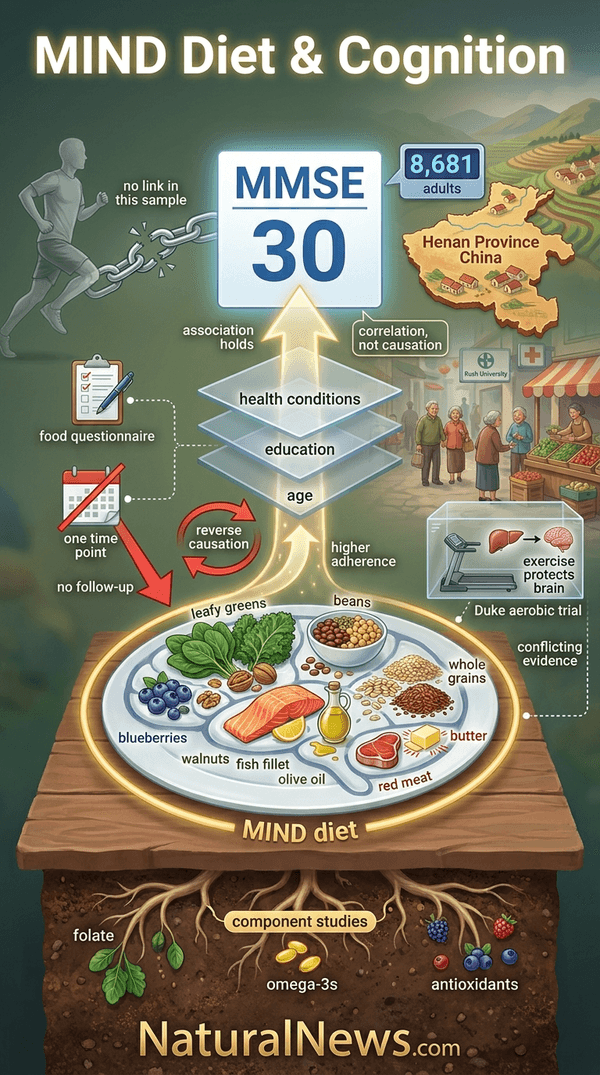
Older adults who more closely followed the MIND diet tended to score higher on cognitive screening tests than those who did not, according to findings published in Frontiers in Nutrition and described in a report by mindbodygreen on October 30, 2026. The analysis drew on data from 8,681 independently living older adults in Henan Province, China.
The MIND diet combines elements of the Mediterranean and DASH eating patterns and is built around foods associated with brain health, the report stated [1]. The study captured diet and cognitive performance at a single point in time, and researchers said the design can show association but cannot establish cause and effect.
“Participants who followed the MIND diet more closely tended to score higher on cognitive tests,” the mindbodygreen report stated, adding that the association remained after researchers accounted for age, education, and health conditions. The report described the findings as one piece of a broader brain-health strategy rather than a stand-alone answer.
How the Study Was Conducted
Participants completed a food questionnaire that researchers used to assess how closely their eating habits matched MIND diet guidelines, according to the report. Cognitive function was measured with the Chinese version of the Mini-Mental State Examination, a screening tool that covers memory, attention, and language.
Researchers said the association between higher MIND adherence and higher cognitive scores held after accounting for factors including age, education, and health conditions. The study captured a single point in time rather than following participants over multiple years, according to the report, which limits what the results can show about changes in cognition over time.
The approach resembles other observational work on diet and cognition.
Physical Activity Showed No Meaningful Association in the Analysis
Researchers reported no meaningful association between physical activity levels and cognitive scores in this sample, the report stated. The analysis also found no evidence that physical activity altered the relationship between diet and cognition. The report noted that the finding does not indicate exercise is unimportant for brain health, only that this study did not detect a clear link in its sample.
The result runs against a substantial body of separate research. Researchers from Duke University conducted an experiment with older people who lived sedentary lifestyles and reported that regular aerobic exercise improved brain function measures in participants with neurocognitive problems [2]. Another review described a liver-to-brain pathway by which physical activity may protect the blood-brain barrier, with the authors saying the findings partly explain how exercise protects the brain [3].
Officials and researchers cited in the mindbodygreen report said simultaneous measurement of diet and cognition limited the ability to determine the direction of effect. Because diet and cognition were assessed at the same time, the analysis could not establish whether eating habits influenced cognitive function or whether other factors contributed to both, according to the report.
What the MIND Diet Includes
The eating pattern emphasizes leafy greens, other vegetables, berries, nuts, beans, whole grains, fish, poultry, and olive oil, according to the report. It recommends limiting red meat, butter, cheese, fried foods, pastries, and sweets. Wine appears in traditional MIND diet guidelines, but the report stated there is no need to start drinking for potential brain benefits.
Many recommended foods supply nutrients that support normal brain function, the report stated. Leafy greens and beans provide folate, while nuts, olive oil, and fish contribute healthy fats. Fruits and vegetables also contain antioxidants, which help protect cells from damage. Researchers have proposed that these nutrients may support brain health by influencing inflammation and oxidative stress, though the study did not test these mechanisms directly.
Research on individual components of the pattern has accumulated separately. A review consolidated decades of evidence showing that regular consumption of wild blueberries — about one cup daily — is linked to improvements in memory, attention, blood pressure, cholesterol, and blood sugar regulation, with the berries’ anthocyanins described as central to their health-promoting properties [4]. A four-year Spanish study of 447 older adults showed that consuming olive oil significantly improved memory, attention, and cognitive scores compared with low-fat diets, according to a separate report [5].
Researchers Say More Work Is Needed to Establish Long-Term Effects
The report stated that researchers still need to establish whether the eating pattern can help preserve brain function over time. Because diet and cognition were measured at the same time, researchers said they could not determine whether eating habits influenced cognitive function or whether other factors contributed to both.
The report described the findings as one part of a broader brain-health strategy and noted that the study did not examine mechanisms directly. According to the report, the study’s authors and outside commentators did not endorse any single dietary approach as a guaranteed means of preventing cognitive decline.
The cautious framing matches the wider literature. A review of randomized, controlled whole-diet interventions concluded that the effect on memory and cognitive function in healthy older adults is “modest and inconclusive,” highlighting the need for more well-designed, sufficiently powered studies and for clarification of the mechanisms by which diet impacts cognition in healthy aging [6].
References
- 80 Older Adults With Mild Cognitive Impairment Followed MIND Diet for 12 Weeks; Trial Reports Gains in Cognition and Daily Functioning. https://www.naturalnews.com/2026-09-29-people-with-cognitive-impairment-gain-cognition-functioning.html
- 6 Months of aerobic exercise can improve neurocognition among older people says study – NaturalNews.com, April 24, 2019.
- Study: Exercise Prompts Liver Enzyme That May Protect Brain Barrier. https://www.naturalnews.com/2026-08-10-study-exercise-prompts-liver-enzyme-that-protects-brain.html
- The mighty blueberry From modern superfood to age old health ally – NaturalNews.com, February 13, 2026.
- The brain boosting power of olive oil Why your choice matters more than you think – NaturalNews.com, May 04, 2026.
- The Effect of Whole-Diet Interventions on Memory and Cognitive Function …. https://pmc.ncbi.nlm.nih.gov/articles/PMC11405642/
Explainer Infographic



Advertisements


Food.News © 2026 All Rights Reserved. All content posted on this site is commentary or opinion and is protected under Free Speech. Food.News is not responsible for content written by contributing authors. The information on this site is provided for educational and entertainment purposes only. It is not intended as a substitute for professional advice of any kind. Food.News assumes no responsibility for the use or misuse of this material. Your use of this website indicates your agreement to these terms and those published on this site. All trademarks, registered trademarks and servicemarks mentioned on this site are the property of their respective owners.